

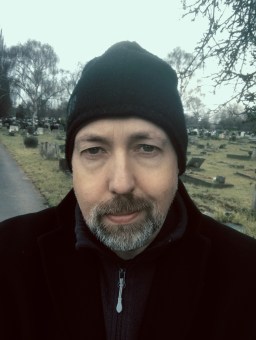
3Q’s today is with an author whose work I have really enjoyed reading!
I connected with Christopher through Kendall Reviews and have read a fair amount of his stories. Christopher reminds me a lot of Adam Nevill, in that he writes how the current crop of authors write (fast and loose) while also keeping one steady hand in the old ways (slow and delicate) and because of that, his work is always something that makes you sit down and take notice.
Super excited to have him stop by today!
Welcome Christopher!
Steve: What does your process look like once you finish your first draft? Do you immediately dive back into it, or do you take some time away?
CH: If only I had finished my current book in a single draft! I’m afraid the first draft lost its way during the pandemic and by the time I’d got my mojo back, ripped apart that attempt, and wrestled the remains into a form I was happy with, I was onto at least Draft 4!
There does come a point, however, when it’s important to put the work aside for a few weeks. You need to return to that manuscript with fresh eyes or else you’re in danger of seeing only what you expect, rather than what’s actually there.
Steve: What’s the one thing you’d change now if you’d have known it when you started writing?
CH: Perhaps I wouldn’t have spent so many years writing non-fiction. My initial plan was to write horror, but when I started out in the 1990s, the quickest and easiest route to getting published and paid was via letters to newspapers, writing filler paragraphs, and submitting magazine articles. One of my abiding interests is folklore and the paranormal, and at that time magazines were practically screaming for articles on those subjects thanks to the phenomenal popularity of ‘The X-Files’. I found some success writing those, and that helped to deepen my interest in those subjects. Step by step, I ended up focused on serious paranormal research on the one hand and writing collections of local legends and real-life ghost stories on the other. It wasn’t until a few years ago when political changes in the UK resulted in me losing my regular non-writing income plus much of the money I’d set aside for the proverbial rainy day (do NOT get me started on that!) that I found myself no longer able to afford the lengthy and often expensive research that went into those books. Those changes forced me to take a long, hard look at where I had ended up. In the end I said goodbye to that life, began again with a pen name, and set out to write the horror fiction I’d initially intended.
Having said all that, maybe I wouldn’t change the past because so much of that old life is now fuel and source material for this one.
Steve: Of the books or stories you’ve released, which is your personal favorite and why?
CH: My favourite is always the story I’m thinking of writing next. The one still full of endless potential, existing only as waves of probability yet to be collapsed by decisions and imprisoned in words.
But I particularly enjoyed writing ‘The Horror at Lavender Edge’. It’s a novel that seems to divide opinion, and while some readers have raved about it, others (your good self included!) have not been as keen. For me, though, it was a chance to escape the modern world and revisit childhood memories by setting events in London in the 1970s. It’s an era that fascinates me at the moment.
That book was the first in a series and as I answer this question, I am getting ready to release Book 2. It kicks off six months after the events at Lavender Edge with a protagonist coming to terms with how those events have changed him, and struggling with the knowledge that his own selfishness was partly responsible for the way things panned out.
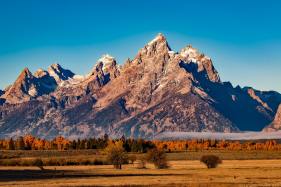
Steve: Bonus Fun Question – Would you rather be lost at sea or in the mountains?
CH: Woah, that’s a hell of a question!
The romantic part of me – that bit of my soul that keeps making me re-read Coleridge’s ‘The Rime of the Ancient Mariner’ – is drawn towards the endless expanse of the ocean, to the magnificent isolation of vast horizons and the silent, crystal clarity of the stars at night, and to the poignant hopelessness of surrender to the inevitable.
But mountains bring at least a slight possibility of obtaining shelter, water (of the drinkable sort), and food. With luck, I might learn to survive in the mountains long enough to find my way out or else to start yet another new life. Why not? I’ve always rather fancied being a hermit.
Steve: That is excellent! And if you lived as a hermit, you could conceivably write a ton of books!
Thanks again for doing this, Christopher!
To find more of his work – check the links!
Amazon: https://www.amazon.com/stores/Christopher-Henderson/author/B0768KRXXR
Twitter: https://twitter.com/ChendersHorror
 Steve Stred - The Official Website